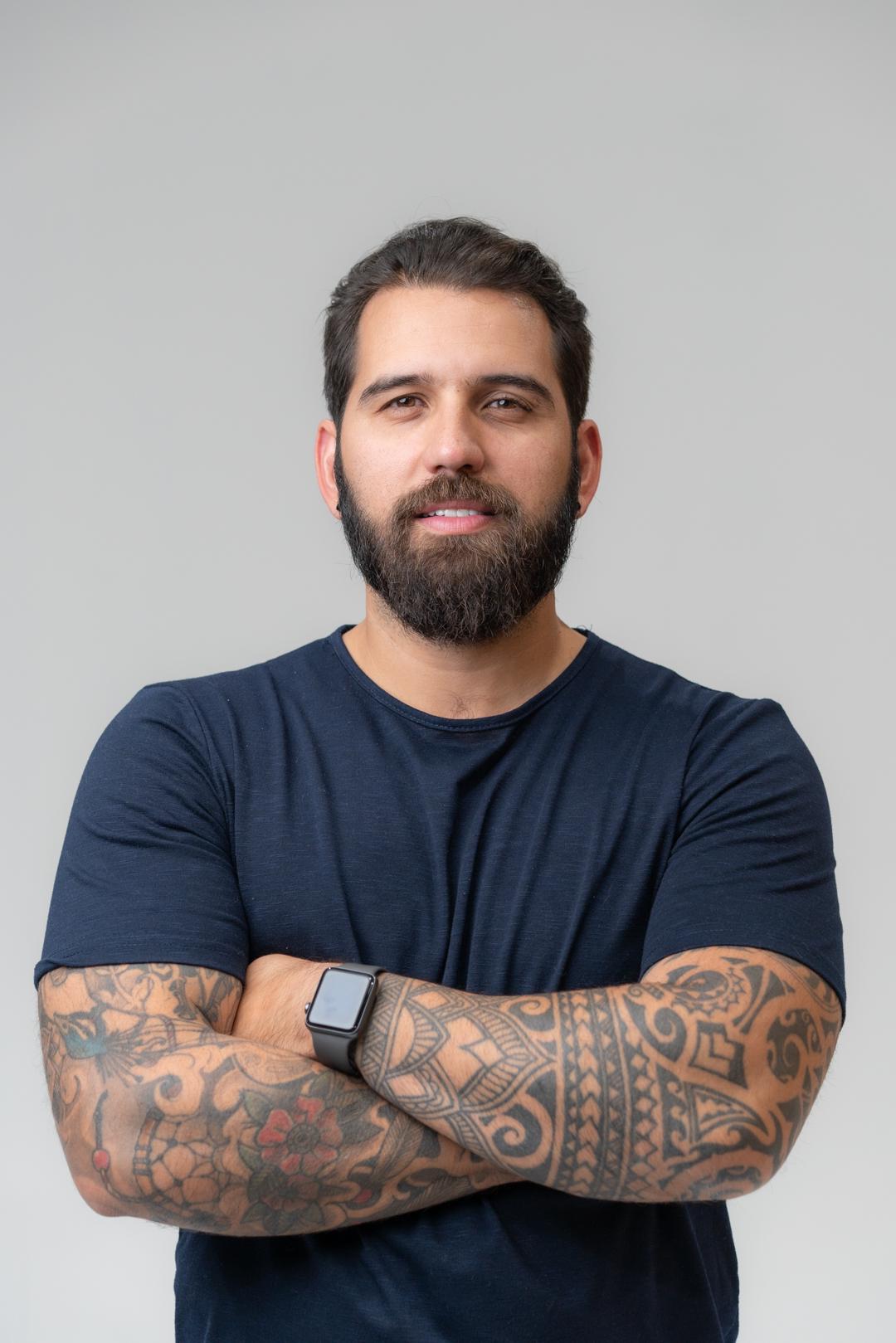
Sebastian Gonzalez

Chief Strategy Officer & Partner, Mazdi

Ahead of 2027: 5 Multicultural Shifts Every Brand Should Plan For

The audience you're planning for isn't the one you planned for last year. Here's what changed, and what to do about it.

Sebastian Gonzalez

Chief Strategy Officer & Partner, Mazdi

Ahead of 2027: 5 Multicultural Shifts Every Brand Should Plan For

The audience you're planning for isn't the one you planned for last year. Here's what changed, and what to do about it.

2027 plans are getting locked right now. Most of them will be built on last year's picture of the American consumer. That picture is out of date. The data from the past few years tells a different story: who's buying, how they identify, and where they live is shifting fast.

Here are five shifts we think every brand should plan for. Then three moves to make before your budget closes.

1. Hispanic households are the growth engine

If you want new customers, look here first.

Between early 2022 and the end of 2025, one in three new buying households added in the U.S. was Hispanic. The Hispanic buyer base grew 13.8% in that time. All households grew 5.7%.

And they spend. Hispanic households are 19.5% of the population but drive 22% of consumer spending. In 2025, the average Hispanic buyer spent $16,890, 3.5% above the total market.


What it means: your next customer is likely multicultural. Plan for growth, not for a niche.

2. There's no such thing as "the" Hispanic consumer

Three in four Hispanic adults say Hispanics are not one culture. They're right.

More than ten origin groups in the U.S. have over a million people each. Mexican households are the largest group, at 57%. But geography changes everything: McAllen is almost entirely Mexican, nearly half of Miami is Cuban, and Orlando skews Puerto Rican.


What it means: one "Hispanic" campaign can't speak to all of them. Segment by origin and by market.

3. Bicultural is the default

Two-thirds of U.S. Hispanics were born in the U.S. And 91% of them speak English proficiently.

At the same time, 94% of Hispanic immigrants speak Spanish at home. Same community, different realities.

The younger generations are also where the growth is. Category spending from Millennial Hispanic households is growing 6.1% a year. Gen Z Hispanic households, 7.3%.


What it means: language is a strategic choice per segment, not a translation task. As Mario Zuluaga and journalist Daniela Cintron put it on our podcast: translating your ad isn't the same as speaking to your audience.

4. Asian America is growing, and it's not one community either

The same lesson applies to Asian American audiences.

There are 19.35 million Asian Americans (Asian alone), 5.8% of the U.S. population. Counting people who identify as Asian in combination with another race, the number reaches 24.8 million, more than double the 2000 figure.

The mix is diverse. Asian Indian (22.9%) and Chinese (21.8%) are the largest origin groups, followed by Filipino (15.4%), Vietnamese (9.7%), Korean (7.6%) and Japanese (3.8%). Income varies just as much: median household income for Indian-headed households is $151,200, versus $67,600 for Burmese-headed households.

And they're concentrated. 31.5% of Asian Americans live in just ten counties. Los Angeles County alone is home to 1.48 million.


What it means: one "Asian" campaign misses most of the opportunity. Know which community, and where.

5. Local beats national

National averages hide the real story.

Net international migration to the U.S. fell from 2.7 million to 1.3 million in a single year. The effect isn't the same everywhere. Hispanic spending is growing 4.0% in Houston, while Miami is flat.


What it means: plan market by market. A national number won't tell you where to put your money.

What to do before your 2027 budget locks

1. Segment by origin and market, not by label. "Hispanic" and "Asian" are starting points, not strategies. Start with who your audience really is.

2. Test before you spend. Run your concepts, creative and packaging past real people before you buy media. That's how we helped Fandango bring a multicultural approach into its brand platform, grounded in research with Hispanic and African American audiences.

3. Find where your audience actually lives. Our free Audience Atlas maps every major Hispanic-origin, Asian-origin and European-ancestry group in the U.S., down to the county.

Let's put culture to work in 2027

Planning next year? We'll spend 20 minutes on where your audience is going. Book a call with our team.


Want more? Listen to Marketing with an Accent, Ep. 03: Beyond Translation, hosted by Mario Zuluaga with guest Daniela Cintron.

Sources

2027 plans are getting locked right now. Most of them will be built on last year's picture of the American consumer. That picture is out of date. The data from the past few years tells a different story: who's buying, how they identify, and where they live is shifting fast.

Here are five shifts we think every brand should plan for. Then three moves to make before your budget closes.

1. Hispanic households are the growth engine

If you want new customers, look here first.

Between early 2022 and the end of 2025, one in three new buying households added in the U.S. was Hispanic. The Hispanic buyer base grew 13.8% in that time. All households grew 5.7%.

And they spend. Hispanic households are 19.5% of the population but drive 22% of consumer spending. In 2025, the average Hispanic buyer spent $16,890, 3.5% above the total market.


What it means: your next customer is likely multicultural. Plan for growth, not for a niche.

2. There's no such thing as "the" Hispanic consumer

Three in four Hispanic adults say Hispanics are not one culture. They're right.

More than ten origin groups in the U.S. have over a million people each. Mexican households are the largest group, at 57%. But geography changes everything: McAllen is almost entirely Mexican, nearly half of Miami is Cuban, and Orlando skews Puerto Rican.


What it means: one "Hispanic" campaign can't speak to all of them. Segment by origin and by market.

3. Bicultural is the default

Two-thirds of U.S. Hispanics were born in the U.S. And 91% of them speak English proficiently.

At the same time, 94% of Hispanic immigrants speak Spanish at home. Same community, different realities.

The younger generations are also where the growth is. Category spending from Millennial Hispanic households is growing 6.1% a year. Gen Z Hispanic households, 7.3%.


What it means: language is a strategic choice per segment, not a translation task. As Mario Zuluaga and journalist Daniela Cintron put it on our podcast: translating your ad isn't the same as speaking to your audience.

4. Asian America is growing, and it's not one community either

The same lesson applies to Asian American audiences.

There are 19.35 million Asian Americans (Asian alone), 5.8% of the U.S. population. Counting people who identify as Asian in combination with another race, the number reaches 24.8 million, more than double the 2000 figure.

The mix is diverse. Asian Indian (22.9%) and Chinese (21.8%) are the largest origin groups, followed by Filipino (15.4%), Vietnamese (9.7%), Korean (7.6%) and Japanese (3.8%). Income varies just as much: median household income for Indian-headed households is $151,200, versus $67,600 for Burmese-headed households.

And they're concentrated. 31.5% of Asian Americans live in just ten counties. Los Angeles County alone is home to 1.48 million.


What it means: one "Asian" campaign misses most of the opportunity. Know which community, and where.

5. Local beats national

National averages hide the real story.

Net international migration to the U.S. fell from 2.7 million to 1.3 million in a single year. The effect isn't the same everywhere. Hispanic spending is growing 4.0% in Houston, while Miami is flat.


What it means: plan market by market. A national number won't tell you where to put your money.

What to do before your 2027 budget locks

1. Segment by origin and market, not by label. "Hispanic" and "Asian" are starting points, not strategies. Start with who your audience really is.

2. Test before you spend. Run your concepts, creative and packaging past real people before you buy media. That's how we helped Fandango bring a multicultural approach into its brand platform, grounded in research with Hispanic and African American audiences.

3. Find where your audience actually lives. Our free Audience Atlas maps every major Hispanic-origin, Asian-origin and European-ancestry group in the U.S., down to the county.

Let's put culture to work in 2027

Planning next year? We'll spend 20 minutes on where your audience is going. Book a call with our team.


Want more? Listen to Marketing with an Accent, Ep. 03: Beyond Translation, hosted by Mario Zuluaga with guest Daniela Cintron.

Sources

Let’s bring your vision to life

Hola, Mario here! Thanks for exploring our website, any questions? Let me your info here and me and my team will reach out to you as soon as possible. We're happy to help!

Profile portrait of a man in a white shirt against a light background

Mario Zuluaga

Founder & VP of New Business

Extreme close-up black and white photograph of a human eye

Contact us

Stay connected

Join our newsletter and stay updated on the latest trends in digital design

Stay connected

Join our newsletter and stay updated on the latest trends in digital design

Stay connected

Join our newsletter and stay updated on the latest trends in digital design